
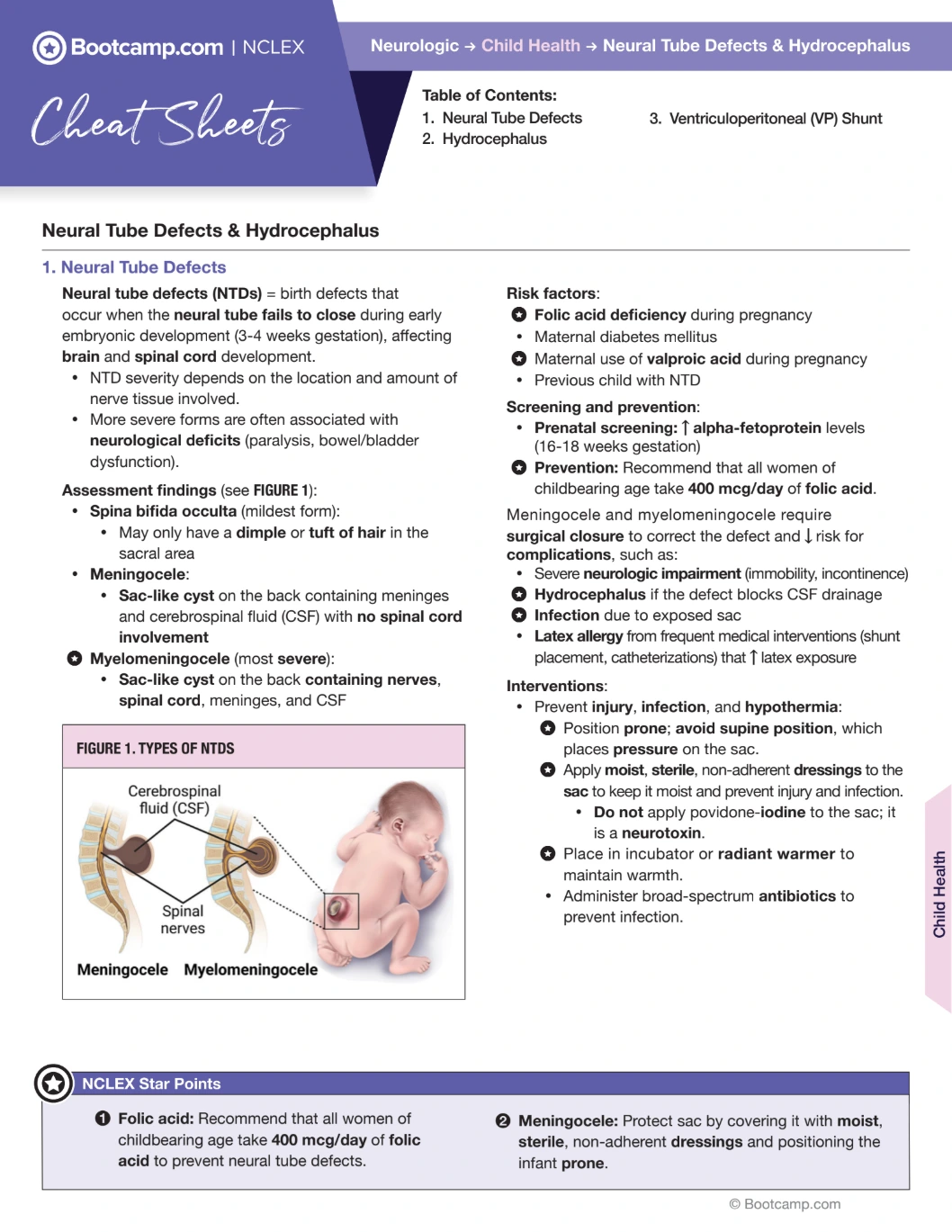
This cheat sheet covers neural tube defects, hydrocephalus, and ventriculoperitoneal (VP) shunts. It explains how NTD severity depends on the location and amount of nerve tissue involved, and the neurological deficits associated with more severe forms.
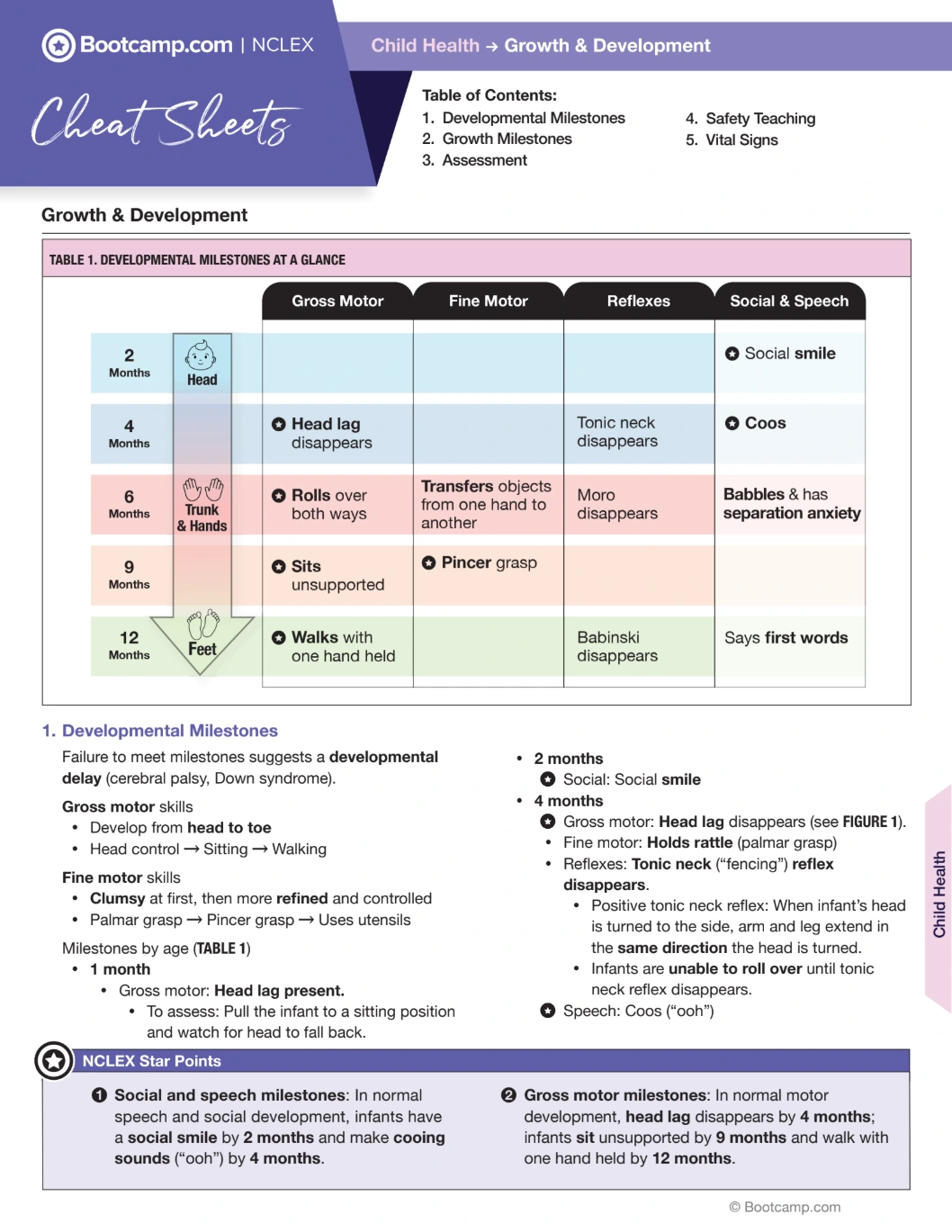
This cheat sheet covers growth and developmental milestones, pediatric assessment, safety teaching, and vital signs by age. It highlights key milestones like the social smile at 2 months and head lag disappearing by 4 months.
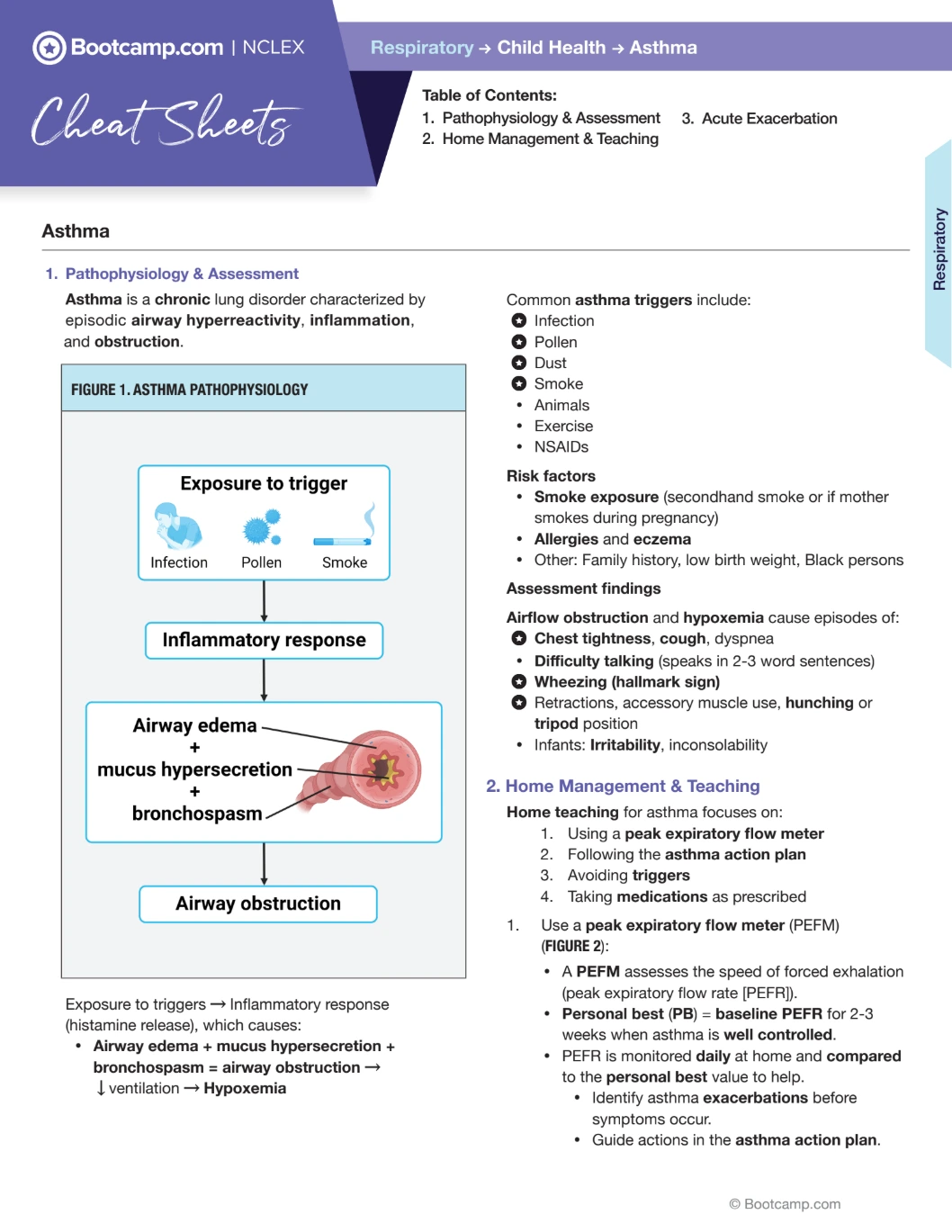
This cheat sheet covers asthma in children, including pathophysiology, assessment, home management and teaching, and acute exacerbations. It explains how triggers like infection, pollen, smoke, and exercise cause airway edema, mucus, and bronchospasm, and emphasizes teaching clients to avoid them.
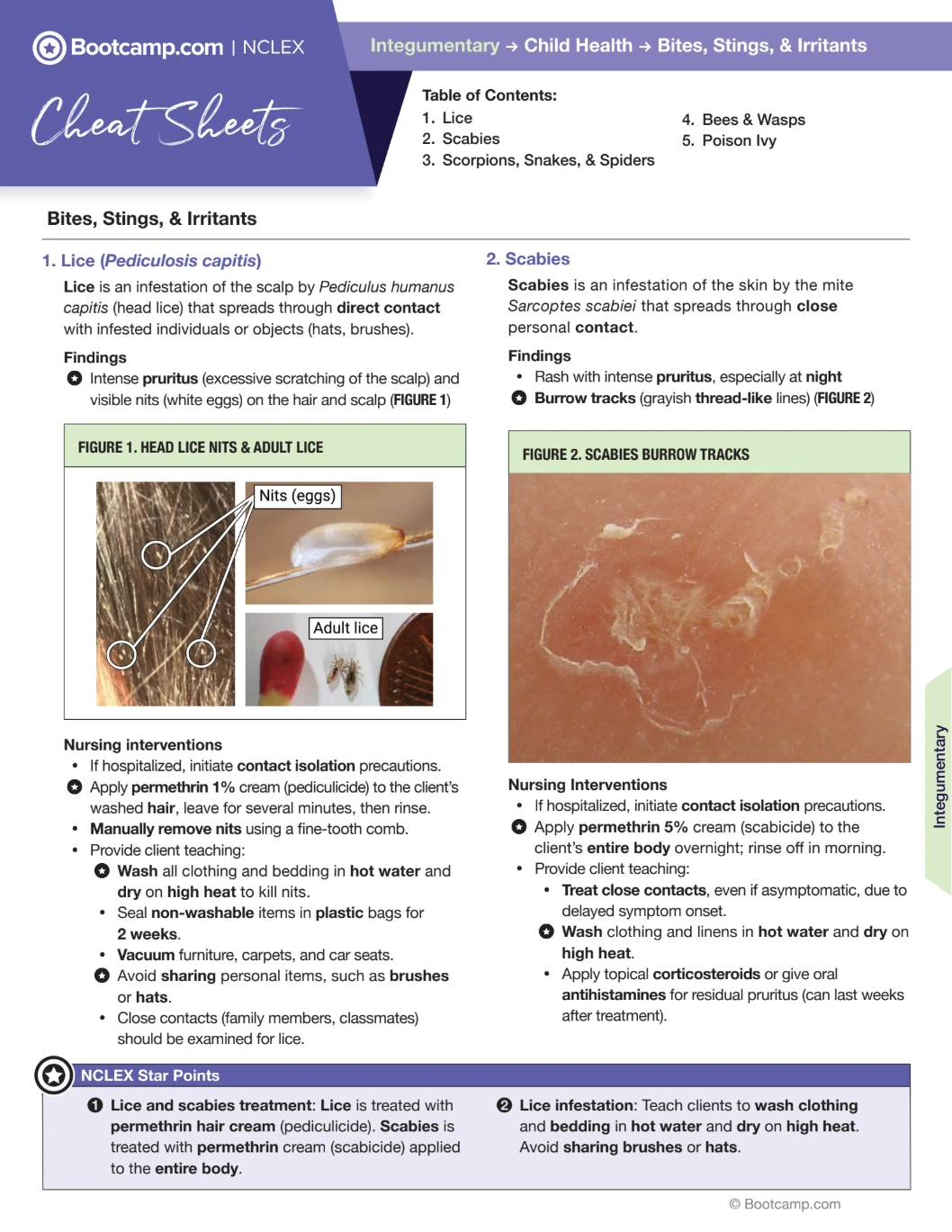
This cheat sheet covers bites, stings, and irritants, including lice, scabies, scorpions, snakes, spiders, bees, wasps, and poison ivy. It explains key findings like intense itching and visible nits with lice, along with nursing interventions for each.
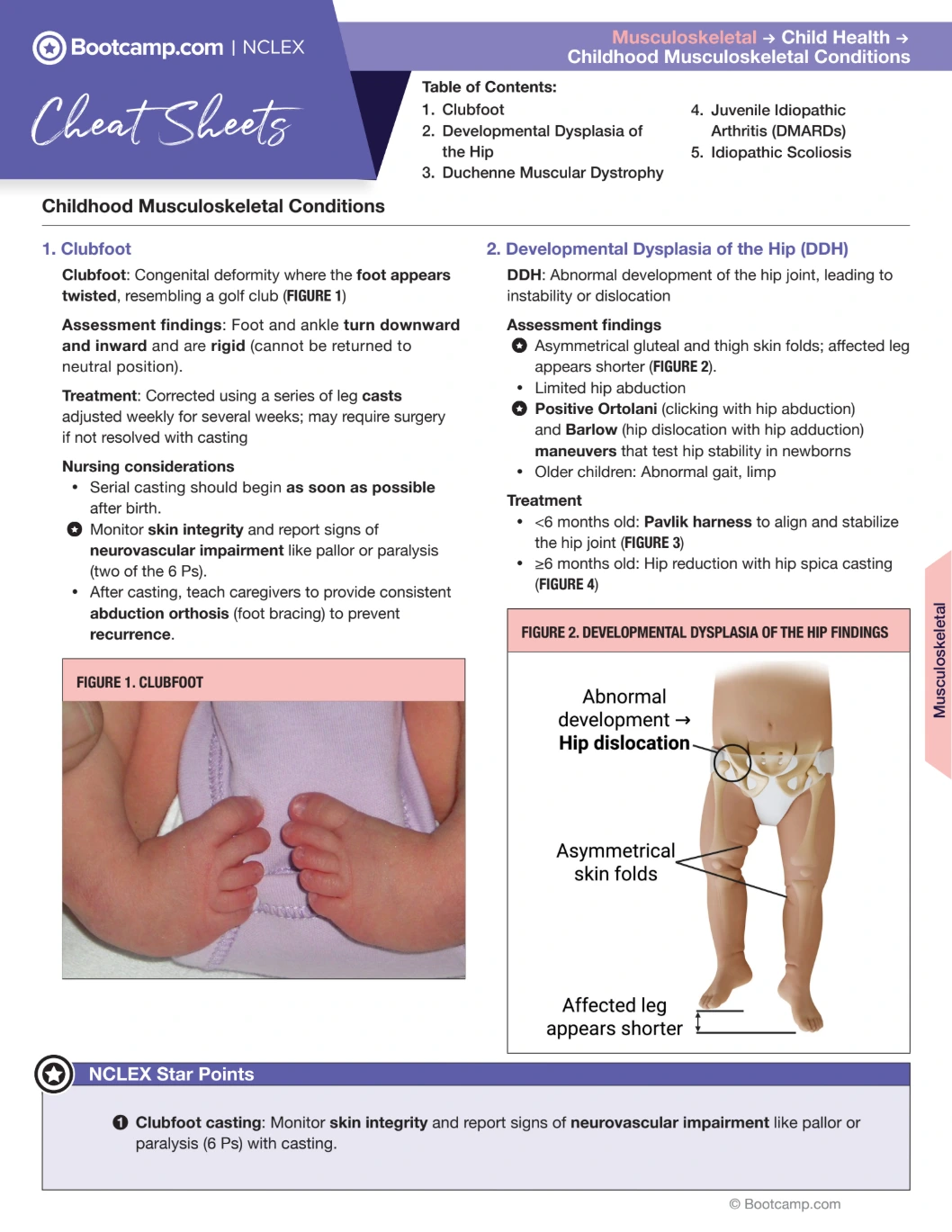
This cheat sheet covers childhood musculoskeletal conditions, including clubfoot, developmental dysplasia of the hip, Duchenne muscular dystrophy, juvenile idiopathic arthritis, and idiopathic scoliosis. It explains key assessment findings and treatments, like serial casting for clubfoot.

This cheat sheet covers infant digestive and feeding disorders, including cleft lip and palate, tracheoesophageal fistula and esophageal atresia, and infant GER and GERD. It emphasizes preventing aspiration, malnutrition, and growth delays through specialized feeding techniques and caregiver education.
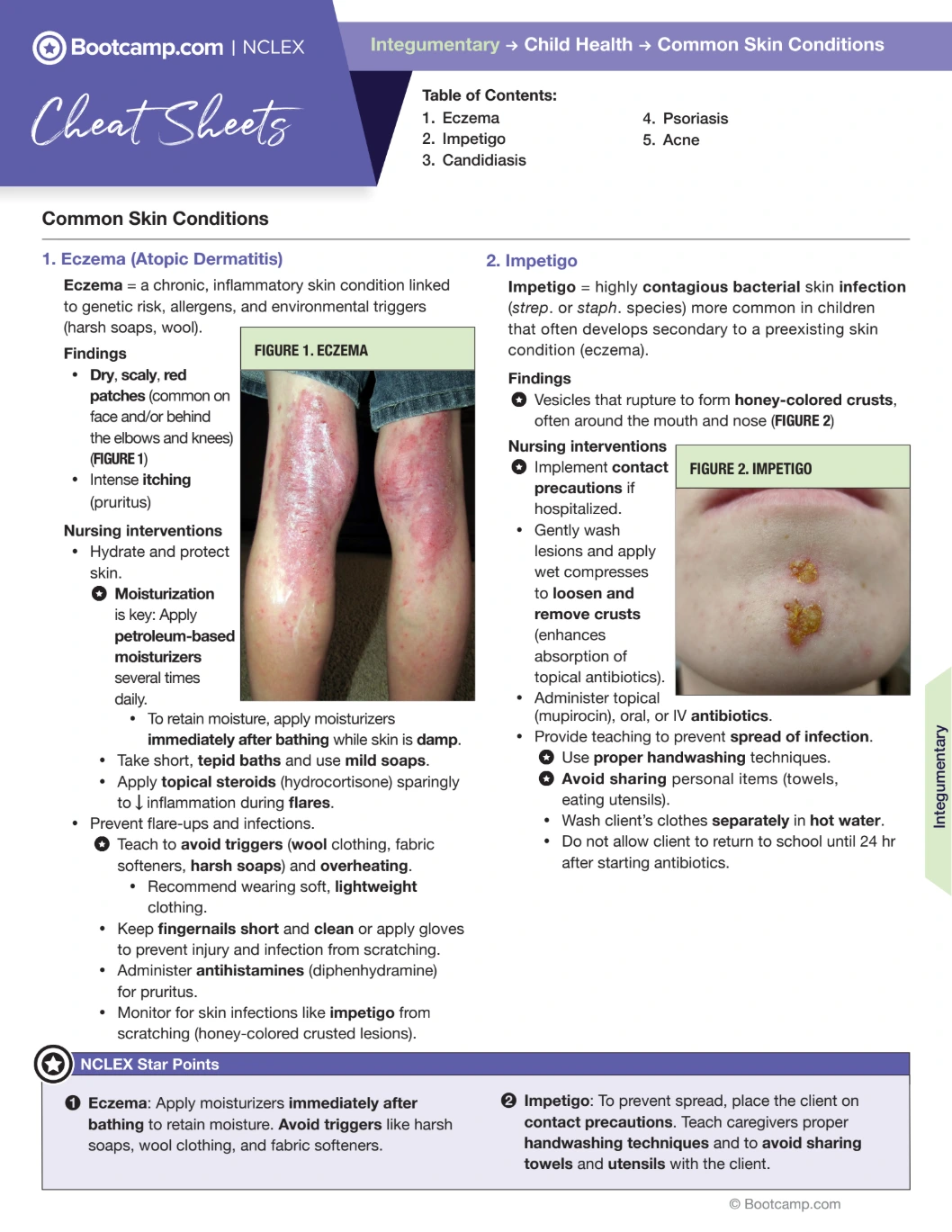
This cheat sheet covers common skin conditions, including eczema, impetigo, candidiasis, psoriasis, and acne. It explains the findings and nursing interventions for each, like keeping skin hydrated with frequent moisturizing for eczema.





