
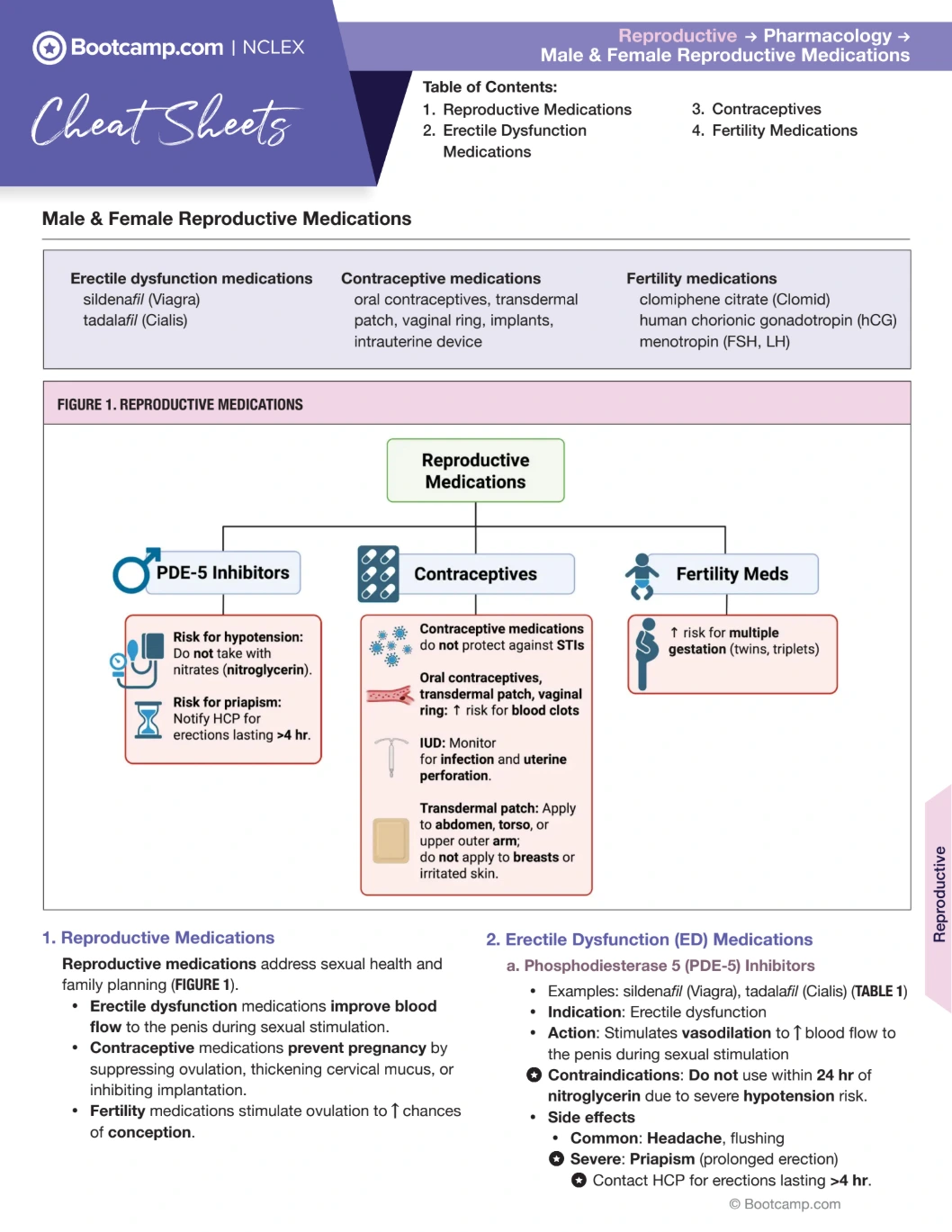
This cheat sheet covers male and female reproductive medications, including erectile dysfunction medications, contraceptives, and fertility medications. It reviews common examples like sildenafil, oral contraceptives, and clomiphene.
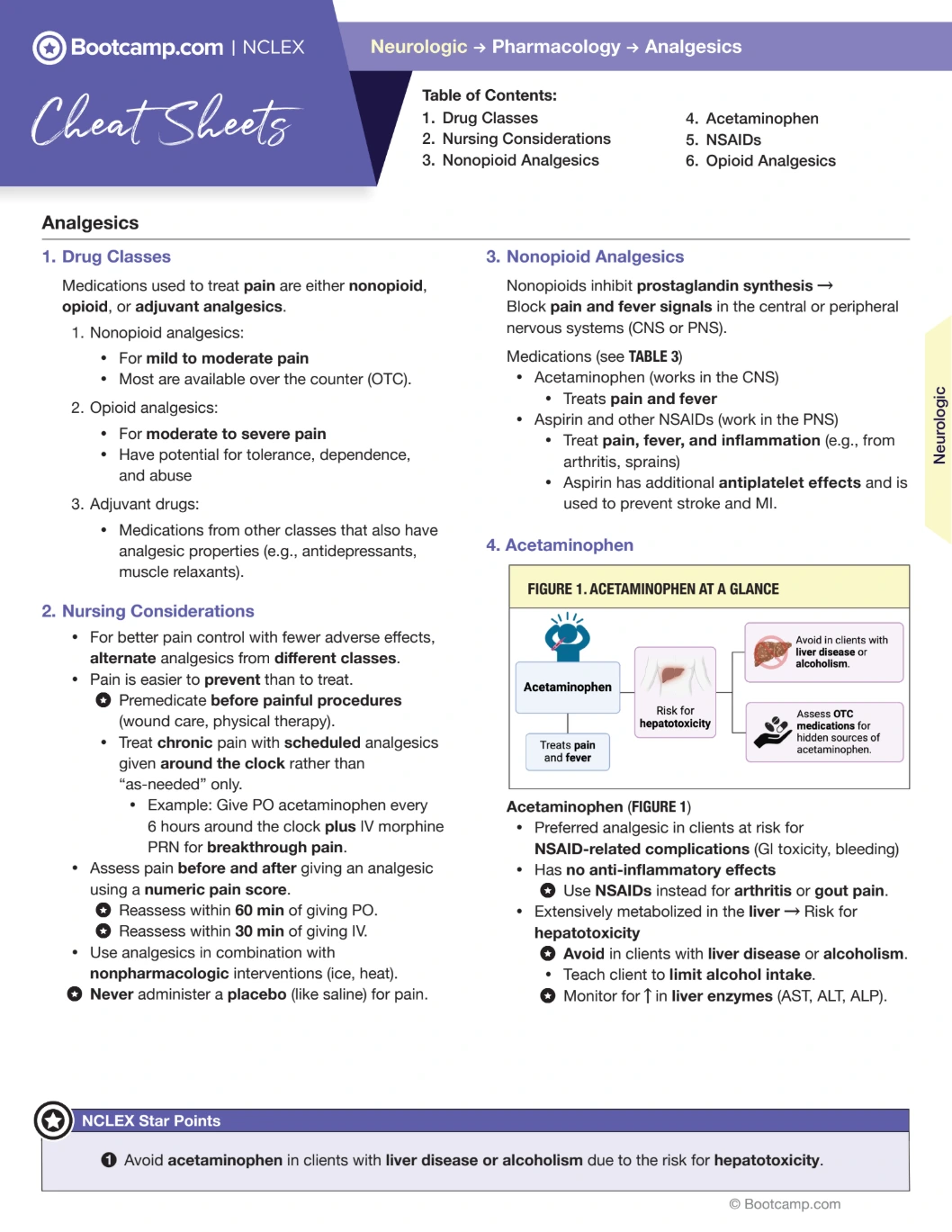
This cheat sheet covers analgesic drug classes, including nonopioid analgesics, acetaminophen, NSAIDs, and opioid analgesics, along with nursing considerations. It explains which drugs treat mild to moderate vs. moderate to severe pain and the risk of tolerance, dependence, and abuse with opioids.
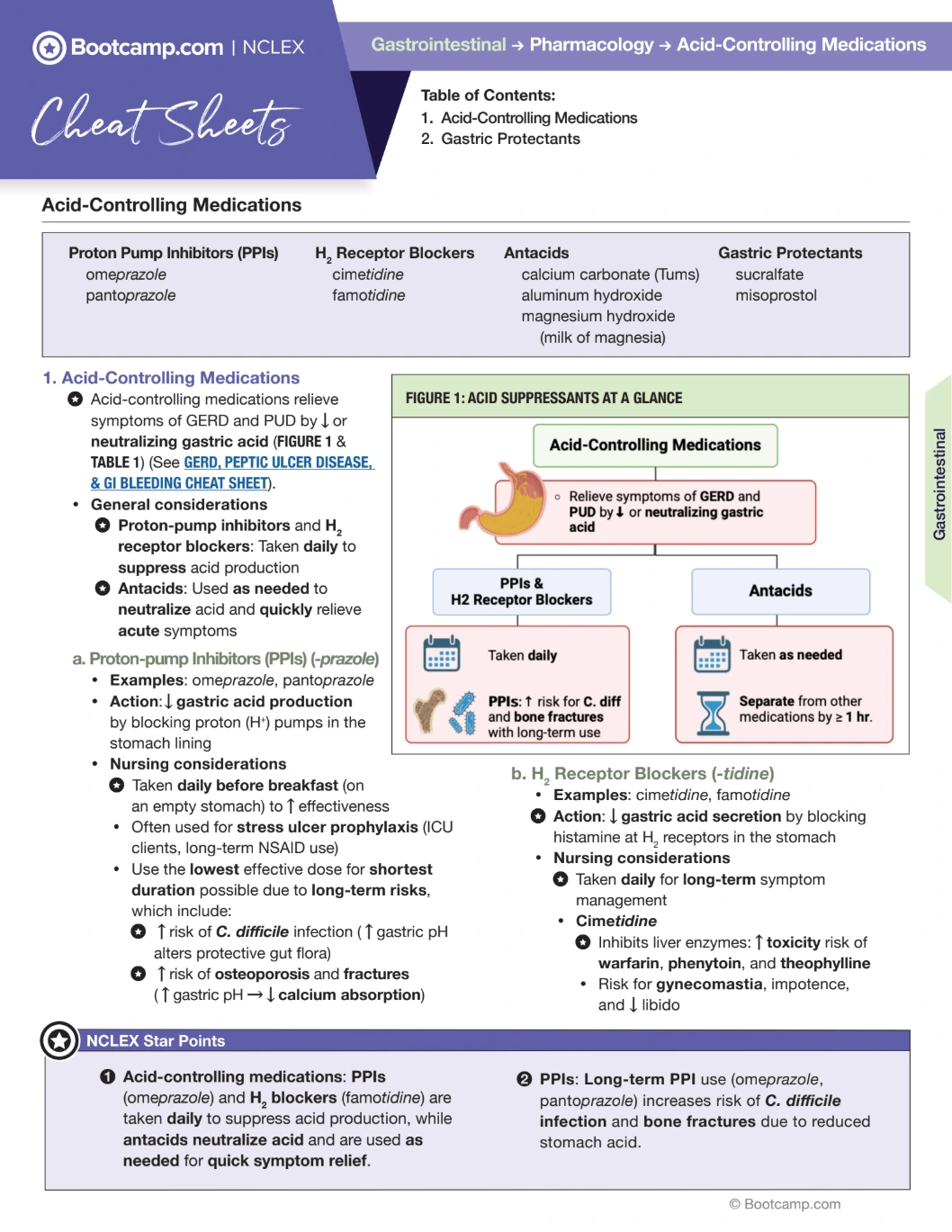
This cheat sheet covers acid-controlling medications like proton-pump inhibitors, H2 receptor blockers, and antacids, plus gastric protectants. It explains how these drugs relieve GERD and PUD symptoms by suppressing or neutralizing gastric acid.
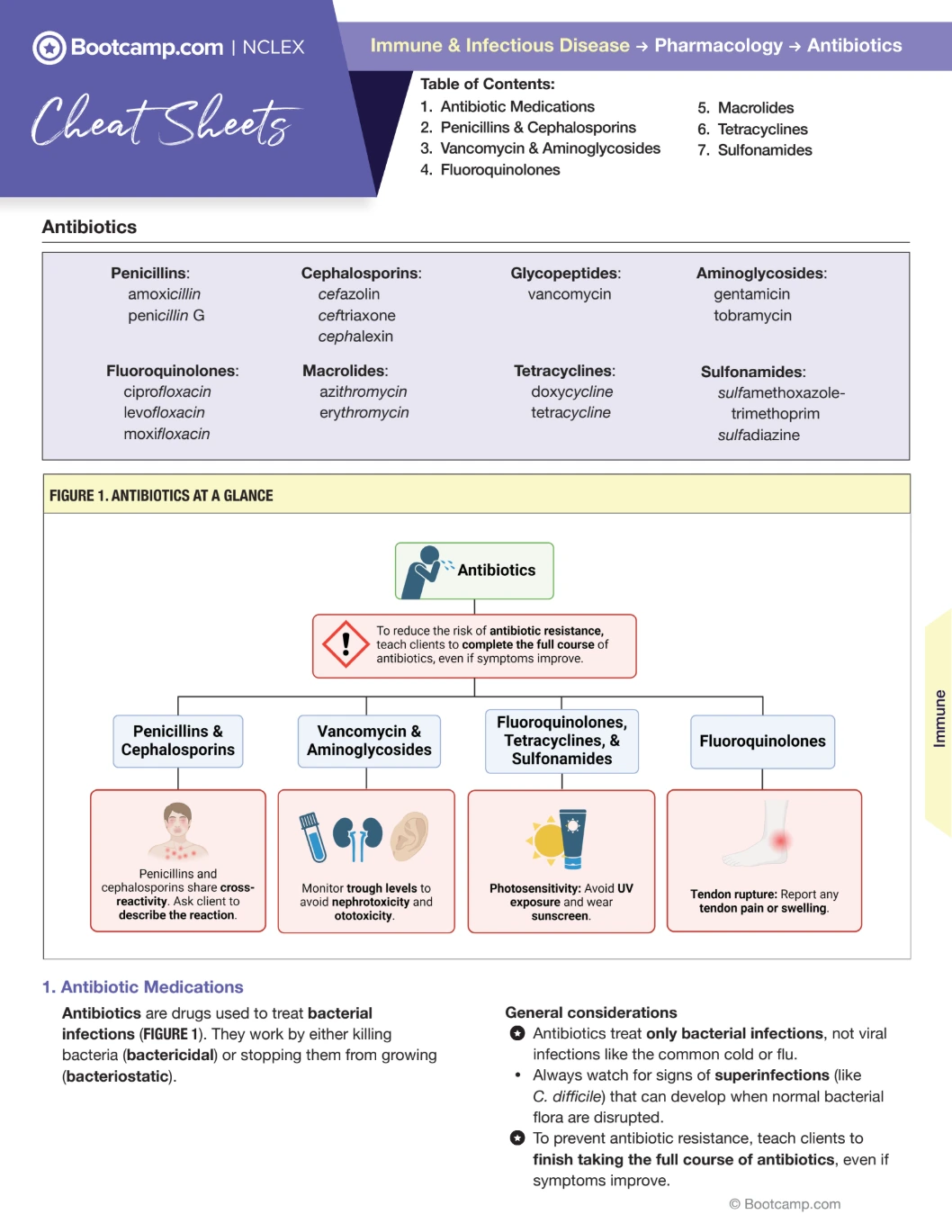
This cheat sheet covers antibiotics, explaining different classes like penicillins, cephalosporins, and fluoroquinolones. It emphasizes completing the full antibiotic course and monitoring for adverse effects like photosensitivity and tendon rupture.
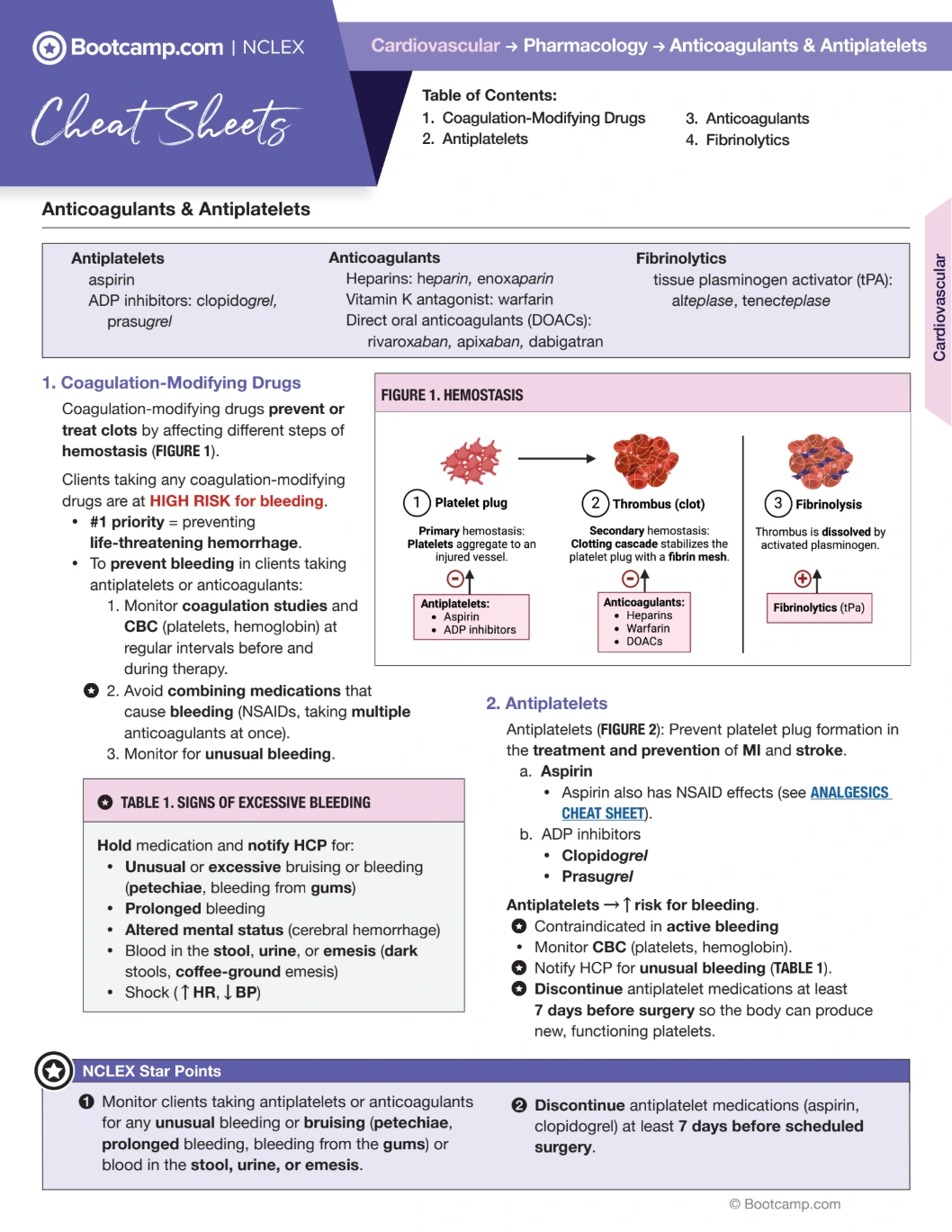
This cheat sheet covers coagulation-modifying drugs, including antiplatelets, anticoagulants, and fibrinolytics. It emphasizes the bleeding risk with these medications and monitoring the CBC, including platelets and hemoglobin.
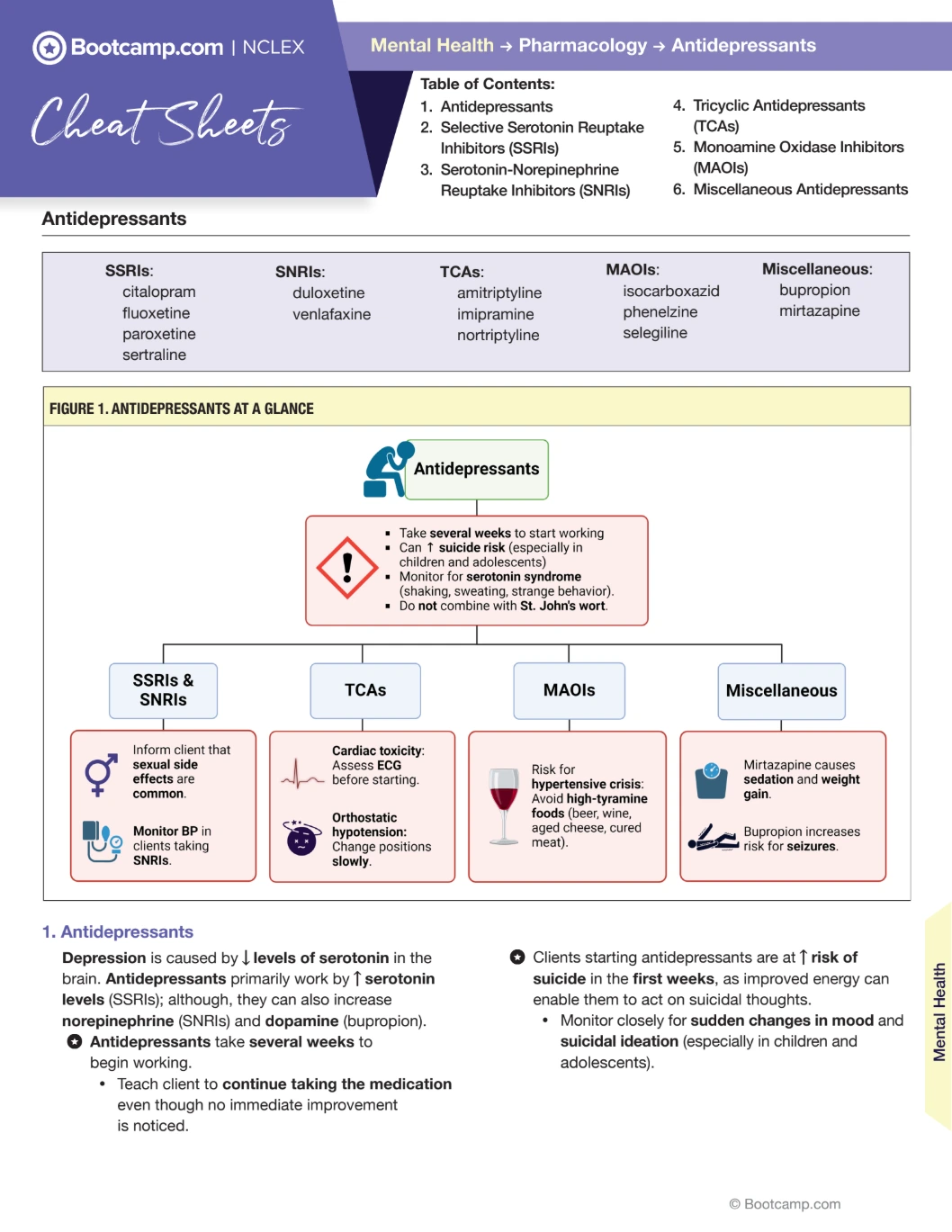
This cheat sheet covers antidepressants, explaining different classes like SSRIs, SNRIs, TCAs, and MAOIs. It reviews common examples of each, like sertraline, venlafaxine, and amitriptyline, along with their nursing considerations.
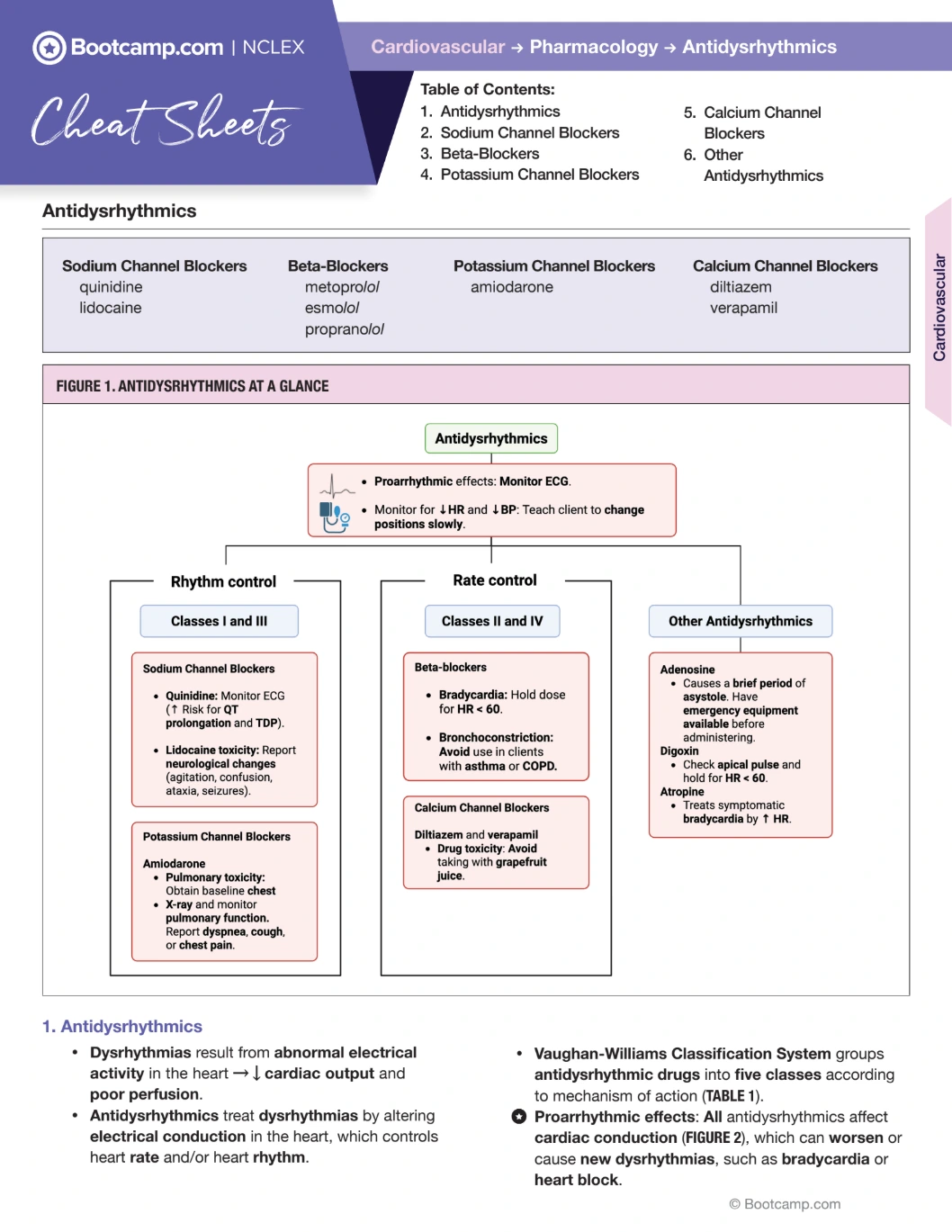
This cheat sheet covers antidysrhythmics, explaining classes like sodium channel blockers, beta-blockers, potassium channel blockers, and calcium channel blockers using the Vaughan-Williams classification. It emphasizes that all antidysrhythmics can worsen or cause new dysrhythmias, like bradycardia and heart block.





