
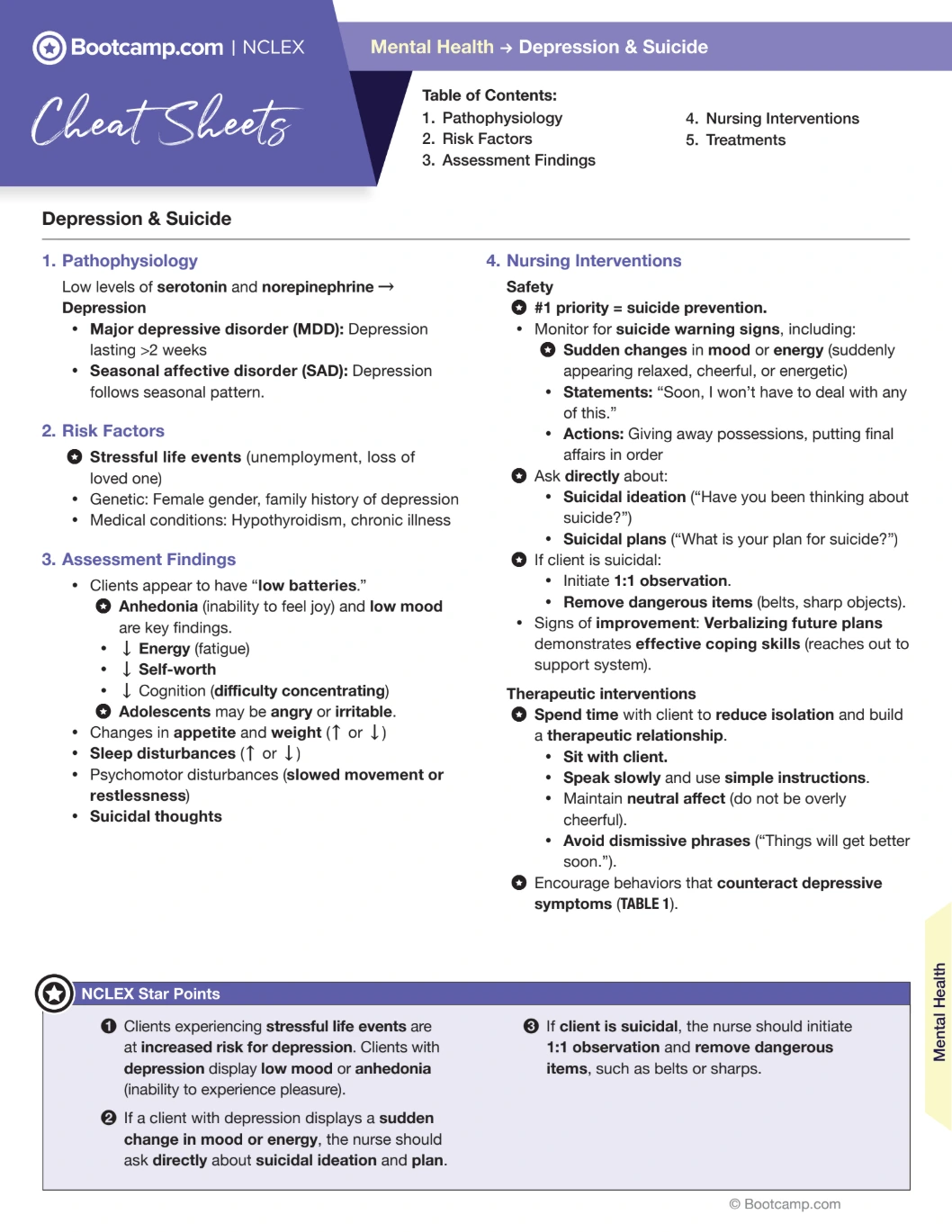
This cheat sheet covers depression and suicide, including pathophysiology, risk factors, assessment findings, nursing interventions, and treatments. It explains major depressive disorder and seasonal affective disorder and the risk factors for depression.
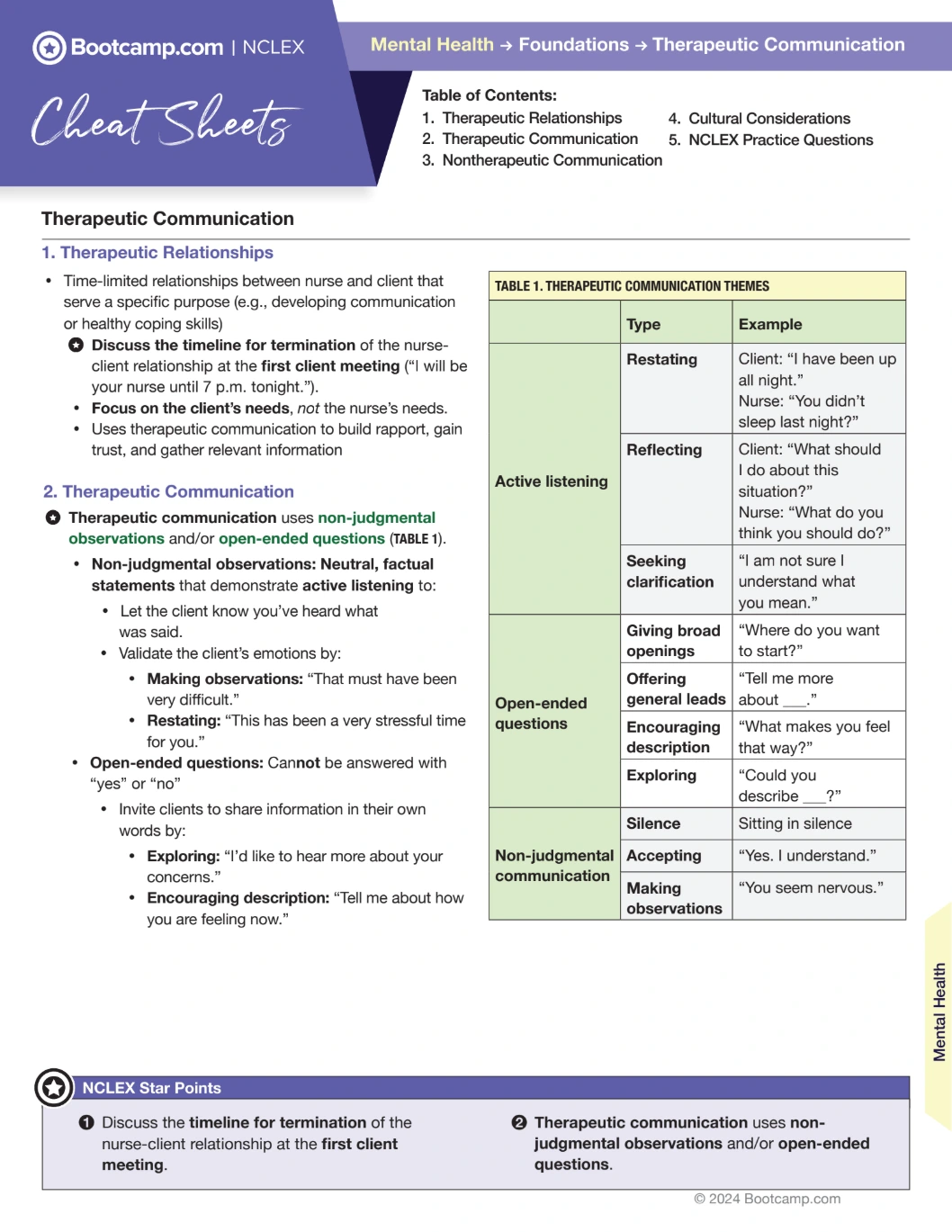
This cheat sheet covers therapeutic relationships, therapeutic and nontherapeutic communication, and cultural considerations, with NCLEX practice questions. It explains how to build a purposeful, time-limited nurse-client relationship and which responses to use or avoid.
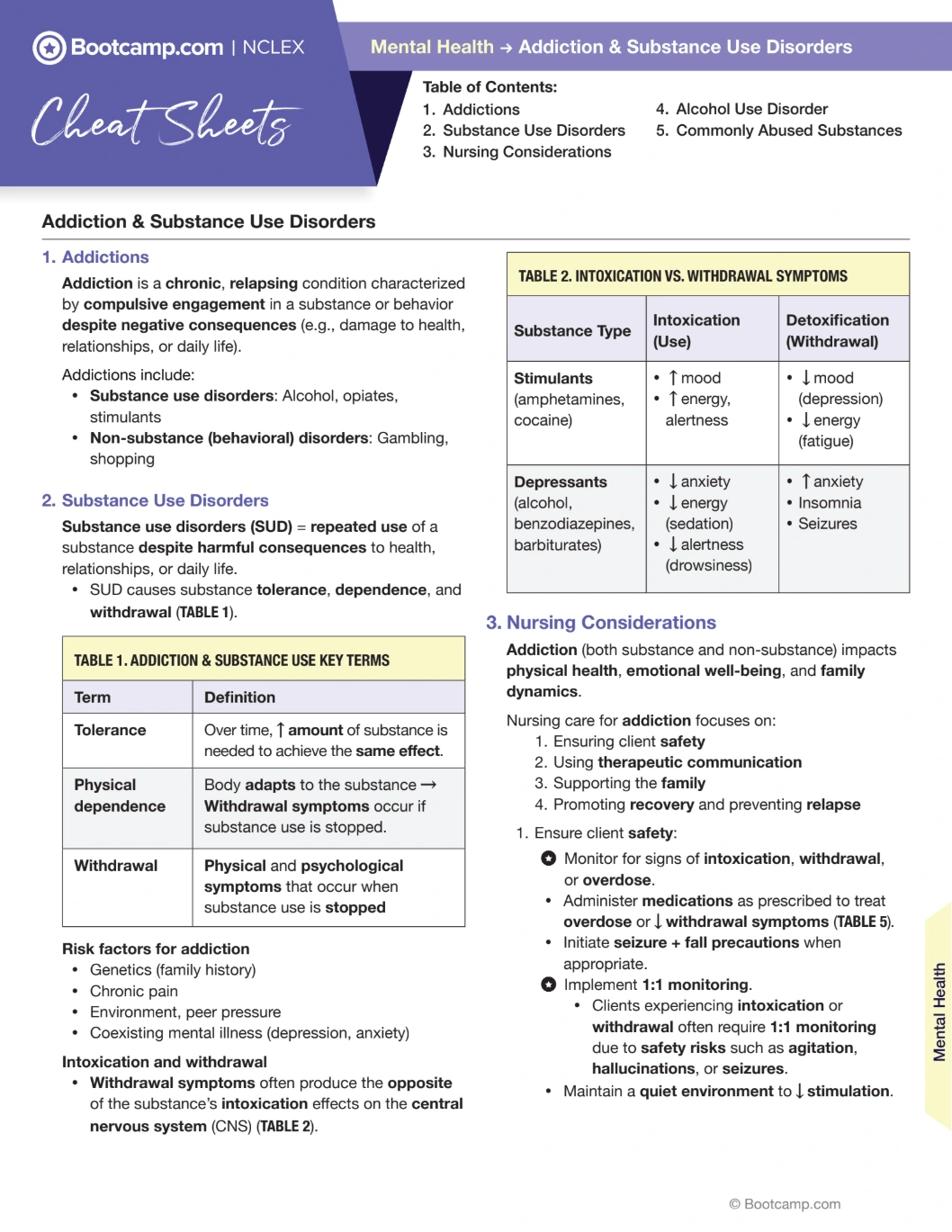
This cheat sheet covers addictions and substance use disorders, nursing considerations, alcohol use disorder, and commonly abused substances. It explains addiction as a chronic, relapsing condition marked by compulsive use despite negative consequences.
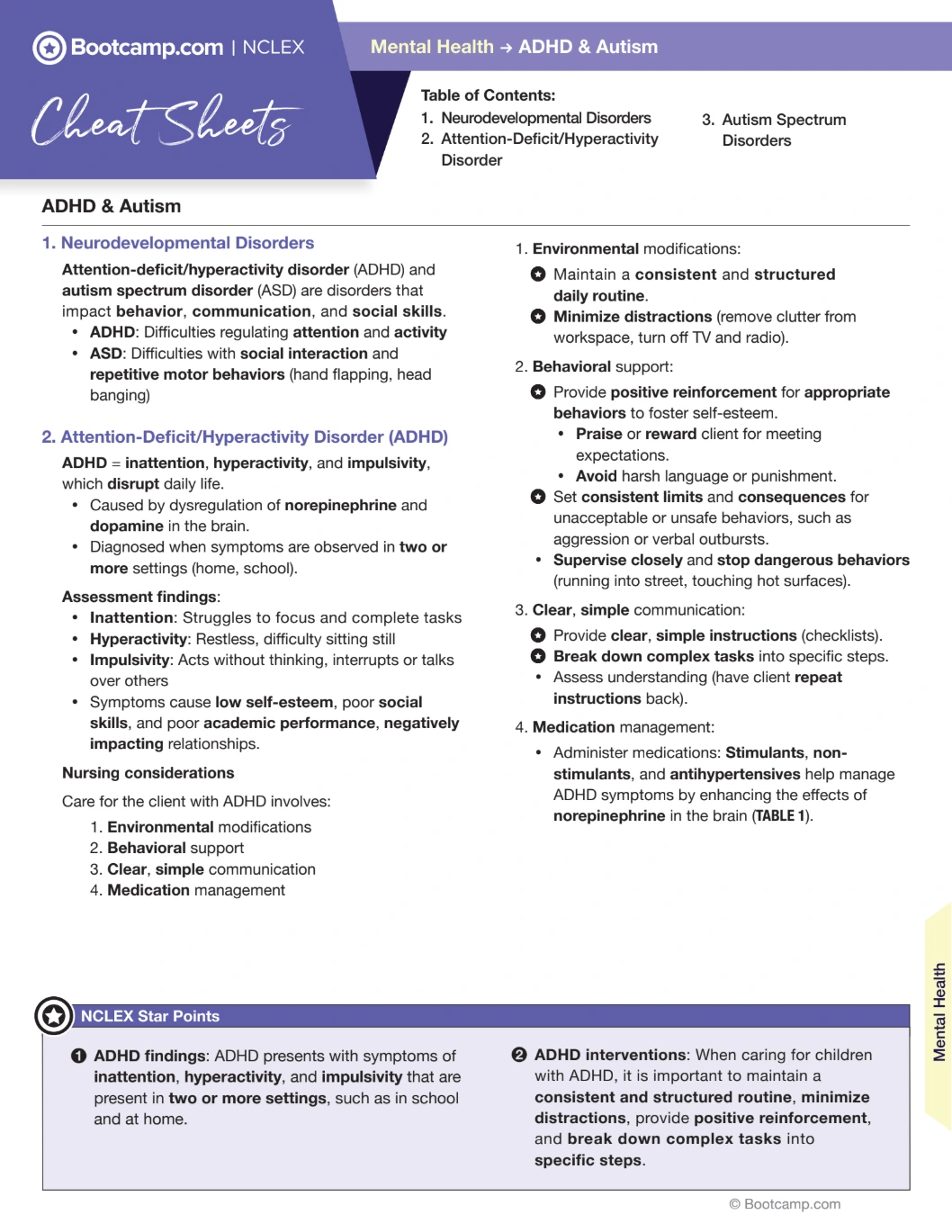
This cheat sheet covers neurodevelopmental disorders, including attention-deficit/hyperactivity disorder and autism spectrum disorder. It explains how each affects behavior, communication, and social skills.
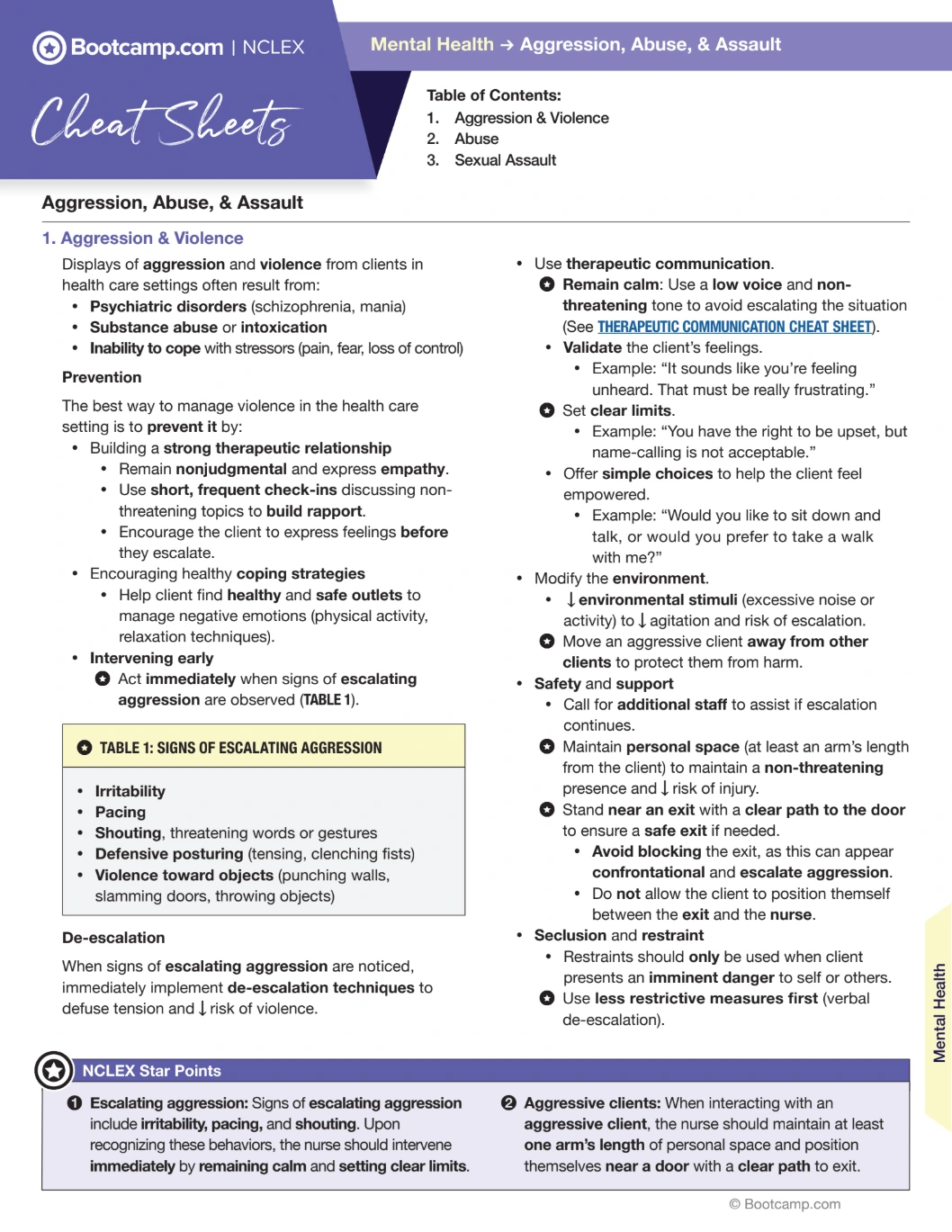
This cheat sheet covers aggression and violence, abuse, and sexual assault. It explains common causes of aggression in health care settings, like psychiatric disorders, intoxication, and difficulty coping with stressors, and how to prevent escalation.
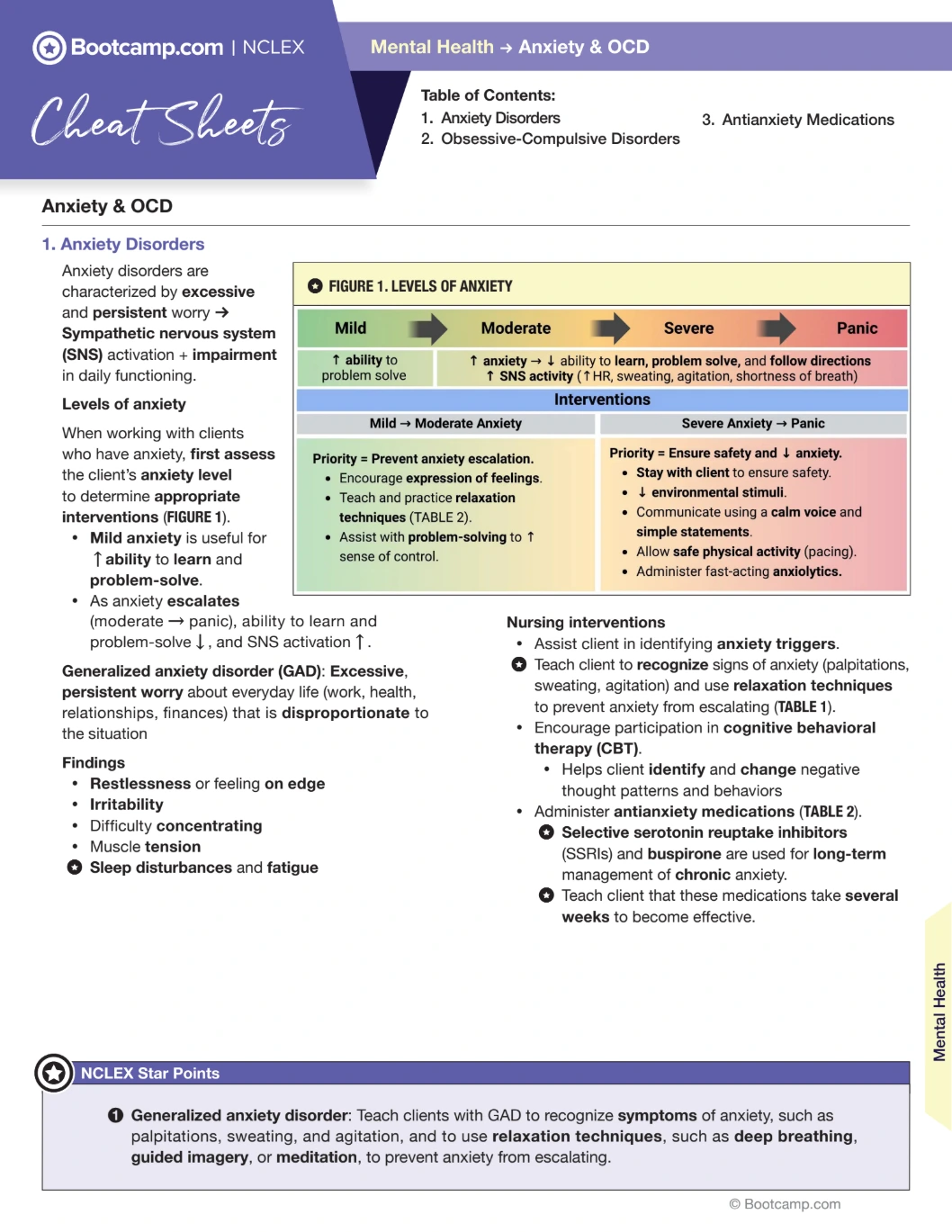
This cheat sheet covers anxiety disorders, obsessive-compulsive disorders, and antianxiety medications. It emphasizes first assessing the client's level of anxiety to choose the right interventions.
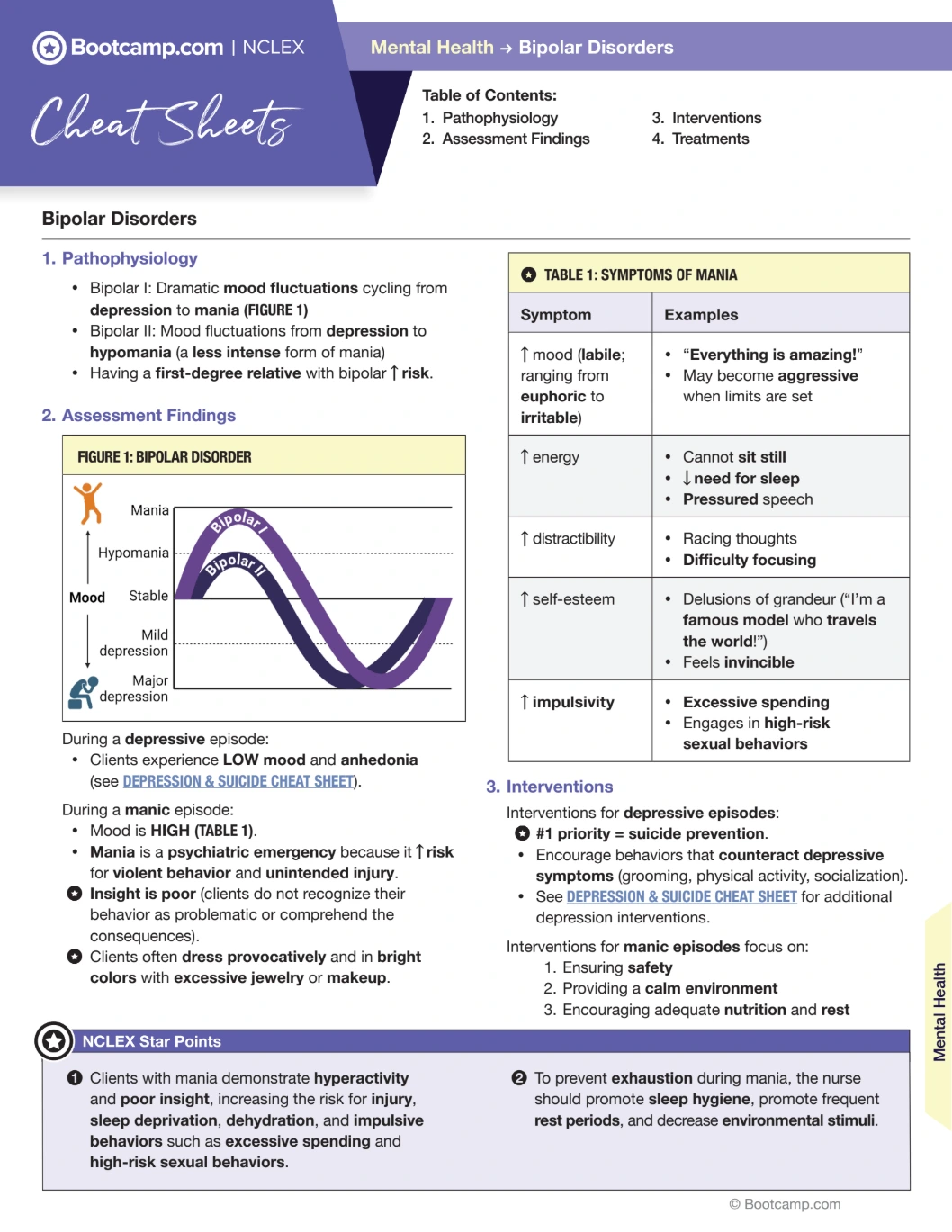
This cheat sheet covers bipolar disorders, including pathophysiology, assessment findings, interventions, and treatments. It emphasizes preventing exhaustion during mania by promoting rest and sleep hygiene and decreasing environmental stimuli.





